
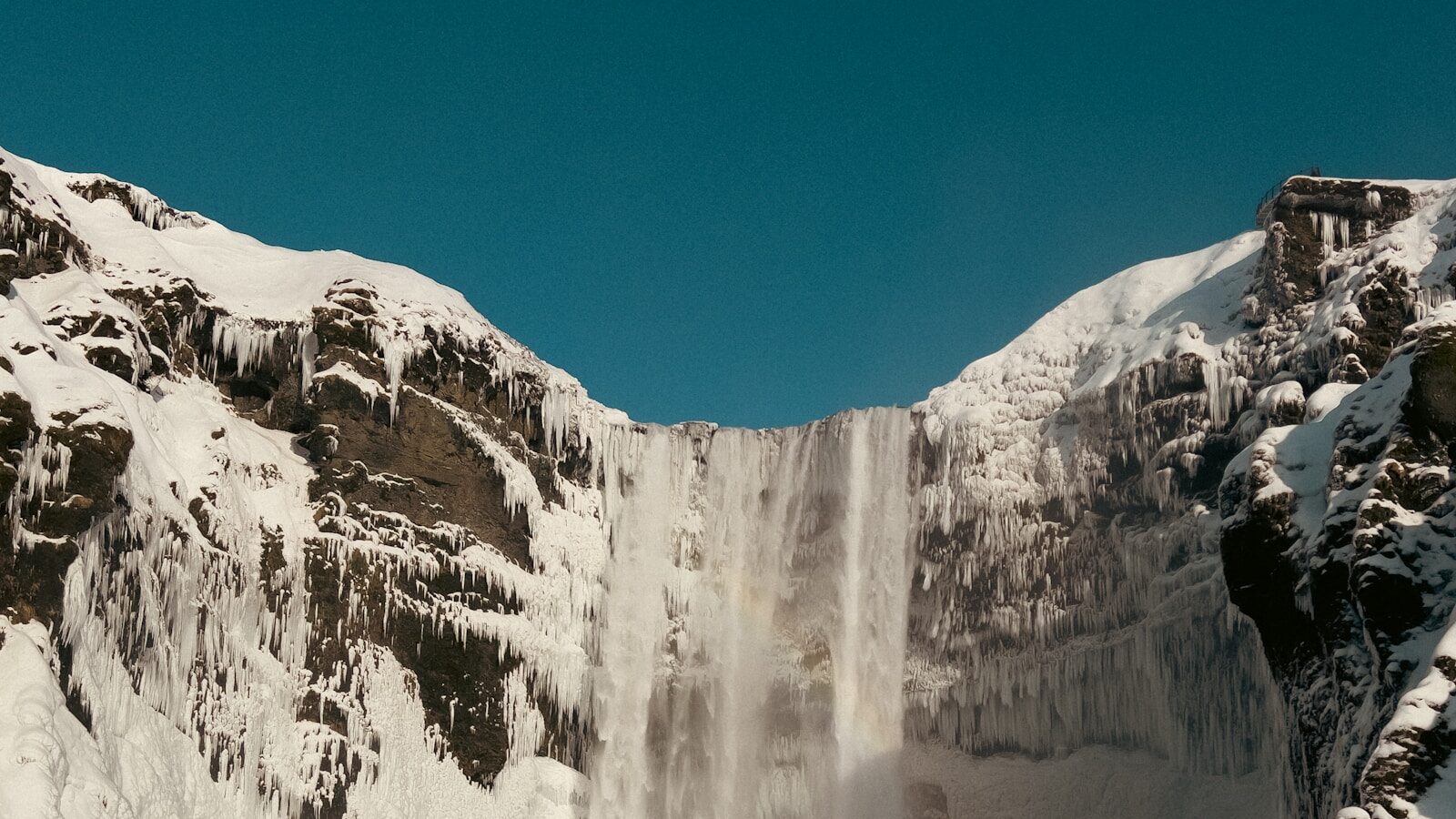
Winter in Iceland (November–March) is beautiful, dramatic, and cold. Expect temperatures around 20–35°F (–6–2°C), but wind chill can make it feel colder. Days are short, nights are long, and the landscapes — snow-dusted waterfalls, frozen lava fields, and icy glaciers — are stunning. Layering is non-negotiable.
Clothing Essentials
Heavy insulated, waterproof winter coat
Down or synthetic, ideally knee-length. Icelandic winds will cut right through anything lighter.
Waterproof pants or snow pants
For waterfall walks, glacier excursions, and snowy streets.
Thermal base layers
Moisture-wicking tops and bottoms. You’ll be layering under sweaters and jackets all day.
Warm mid-layer
Fleece or wool sweater/jacket is perfect for extra insulation.
Waterproof, insulated boots
Snow, ice, and mud are everywhere. Good traction is essential. Bonus if they’re warm enough for glacier tours.
Wool socks (multiple pairs)
Cold feet are misery. Bring extras.
Gloves or mittens (waterproof)
Windproof is key. Mittens are warmer than gloves, but either works.
Hat & scarf / neck gaiter
Protect your ears, neck, and face from biting wind.
Optional: Thermal leggings under your pants, insulated inner gloves, and hand warmers for glacier hikes or northern lights hunting.
Swim & Spa Gear
Swimsuit
Hot springs are even more magical in winter — contrast of icy air and steamy water.
Flip-flops or slides
Locker rooms and spa areas get wet — convenient to have.
Gear & Extras
Backpack/daypack
Carry layers, snacks, water, and camera gear.
Reusable water bottle
Tap water is amazing, and staying hydrated in winter is key.
Sunglasses & sunscreen
Even winter sun reflects off snow and ice — surprise burn is real.
Sleep mask
Iceland’s winter days are short, but blackout helps with early mornings or long flights.
Portable phone charger
Cold drains batteries fast.
Camera with extra memory & tripod
Perfect for northern lights photography.
Travel-size toiletries & moisturizer
Wind + cold = dry skin. Lip balm, moisturizer, and hand cream are lifesavers.
Optional but Nice to Have
- Binoculars (for wildlife or scenic viewpoints)
- Motion sickness meds (snowy roads can be rough)
- Snacks for long tours (grocery stores can be limited in remote areas)
